UK Nationwide & Europe Licensed Dog Transport
Telephone: +44 (0)20 3951 3030
How UK Dog Breeders Can Safely Deliver Puppies to New Owners -
A Practical Transport Guide
Selling puppies today often means dealing with buyers from all over the UK. Years ago, most new owners lived fairly local to the breeder, but now it’s completely normal for someone in Surrey to buy a puppy from Scotland, Wales, or the North of England.
That wider reach is great for responsible breeders — but it also brings one big question:
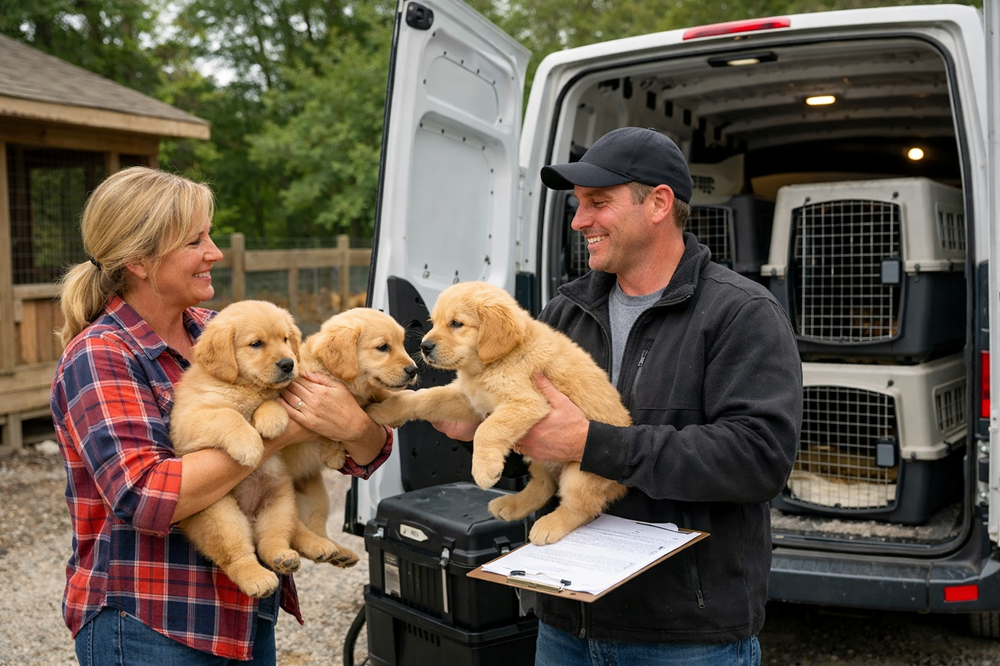
How do you safely and legally get puppies to their new homes?
Whether you’re an experienced breeder or planning your first litter, understanding how puppy transport works in the UK helps protect both the dogs and your reputation. This guide explains the practical side of delivering puppies properly, what the law expects, and what breeders should look for when arranging transport.
Why Puppy Transport Has Become So Common
Good breeders are chosen for quality, temperament, and reputation — not just location. Buyers are often happy to travel long distances for the right puppy, but sometimes logistics get complicated.
Common situations breeders face include:
• Buyers living several hours away
• Families unable to travel long distances
• Multiple puppies going to different parts of the country
• Busy handover schedules during large litters
• Winter travel or long motorway journeys
Driving across the country several times in a week isn’t always practical, especially when you still have dogs at home needing care.
That’s where professional pet transport comes into the picture.
The Legal Side of Transporting Puppies in the UK
This is the part many people aren’t completely clear about — and it matters more than most realise.
In the UK, anyone transporting dogs in connection with a business or commercial activity must follow animal welfare transport regulations.
That includes puppy deliveries linked to a sale.
Professional transporters should hold:
• DEFRA-approved vehicles
• Type 2 Animal Transporter Authorisation (APHA) for longer journeys
• Appropriate welfare procedures during travel
• Valid insurance covering animals in transit
These rules exist for one simple reason — to make sure dogs travel safely, comfortably, and without unnecessary stress.
For breeders, using a properly licensed dog transporter also shows buyers that welfare standards are taken seriously from day one.
Why Licensing and Insurance Matter to Breeders
When a puppy leaves your care, your reputation travels with it.
If transport goes wrong — delays, poor handling, or welfare issues — buyers often associate that experience with the breeder, even if the journey itself wasn’t arranged by you.
A licensed transporter helps reduce risks such as:
• Overcrowded vehicles
• Excessive travel times
• Lack of welfare monitoring
• No insurance protection during transit
Professional operators are required to meet welfare standards covering ventilation, rest periods, space allowances, and journey planning.
It gives breeders peace of mind knowing the puppy’s final step into its new home is handled properly.
Safe Puppy Delivery to New Owners Nationwide
Good breeders care about the entire journey — right up until a puppy reaches its new home. Our door-to-door puppy transport service helps breeders deliver puppies safely to families anywhere in the UK.
A calm, welfare-focused way to complete the final step of the puppy’s journey.
What a Professional Dog Transport Service Should Provide
Not all transport services operate to the same standard, so it’s worth knowing what good practice looks like.
A professional UK dog transporter should offer:
• Door-to-door collection and delivery
• Clean, secure travel areas suitable for puppies
• Temperature-controlled vehicle environments
• Regular welfare checks during travel
• Clear communication and updates
• Appropriate licences and insurance documentation
Buyers often feel reassured when breeders can confidently explain how delivery will work. It removes uncertainty and makes the whole process feel more organised.
How Puppy Delivery Usually Works
For breeders new to arranging transport, the process is generally straightforward.
1. Booking the Journey
Collection details, delivery address, and puppy age are confirmed in advance.
2. Collection From the Breeder
The transporter collects directly from your home or kennel, keeping disruption minimal.
3. Travel and Welfare Monitoring
Puppies are checked regularly during the journey, with comfort and safety prioritised.
4. Delivery to the New Owner
The puppy is handed over directly to the buyer at their home, avoiding stressful meet-ups in unfamiliar locations.
Many breeders find this approach calmer for puppies compared to long owner journeys or service station handovers.
Preparing Puppies for Transport
A little preparation makes a big difference to how smoothly the journey goes.
Helpful steps include:
• Avoid feeding immediately before travel (reduces motion sickness)
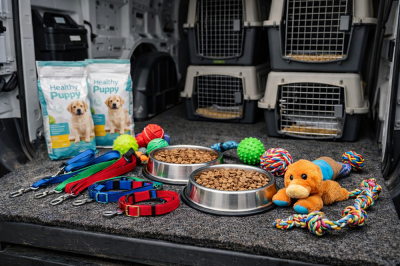
• Provide familiar bedding with litter scent
• Ensure paperwork is ready for handover
• Share feeding routines with the new owner
• Allow puppies time to toilet before collection
Puppies tend to settle quickly when journeys are calm and predictable.

FAQ - Common Questions Dog Breeders Ask
At what age can puppies travel?
Puppies should be fully weaned and old enough to cope comfortably with travel, typically after the legal minimum rehoming age.
Can puppies travel long distances?
Yes, when journeys are properly planned with welfare checks and suitable rest arrangements.
Do breeders need a licence to deliver dogs themselves?
If transport is connected to a business activity, licensing rules may apply. Many breeders prefer using licensed pet transporters to stay compliant.
Is door-to-door delivery better than meeting halfway?
Direct delivery usually reduces stress for puppies and avoids unnecessary handling or unfamiliar environments.
How are dogs kept comfortable during long journeys?
Professional pet transporters plan regular comfort breaks, maintain suitable temperatures inside the vehicle, and provide secure travel spaces so dogs can rest calmly throughout the journey.
Can a puppy travel with its own bedding or familiar items?
Yes, familiar blankets or toys are often encouraged as they help puppies feel more relaxed by providing familiar scents during the journey.
Supporting Buyers Beyond the Sale
One thing experienced breeders often notice is how much delivery affects a buyer’s first impression.
A calm, organised handover helps new owners feel confident and reassured — especially first-time dog owners who may already be nervous.
Reliable transport can turn what might feel like a complicated logistical step into a smooth final part of the puppy’s journey.
A Growing Part of Modern Dog Breeding
As responsible breeding continues to focus on quality rather than convenience, nationwide puppy placements are becoming the norm across the UK.
Having a safe and reliable delivery option allows breeders to:
• Reach the right homes rather than the closest ones
• Reduce travel stress for puppies
• Maintain professional standards
• Provide buyers with a positive experience from start to finish
Ultimately, transport isn’t just about moving a dog from A to B — it’s about ensuring the puppy arrives calm, safe, and ready to settle into its new life.
Company Number: 16854472
Registered Office:
20 Wenlock Road
London
N1 7GU
England
Telephone: +44 (0)20 3951 3030
Email: admin@ukeupettransport.com


UK EU Pet Transport LTD © 2026 All Rights Reserved